Scamp’s Healing Journey
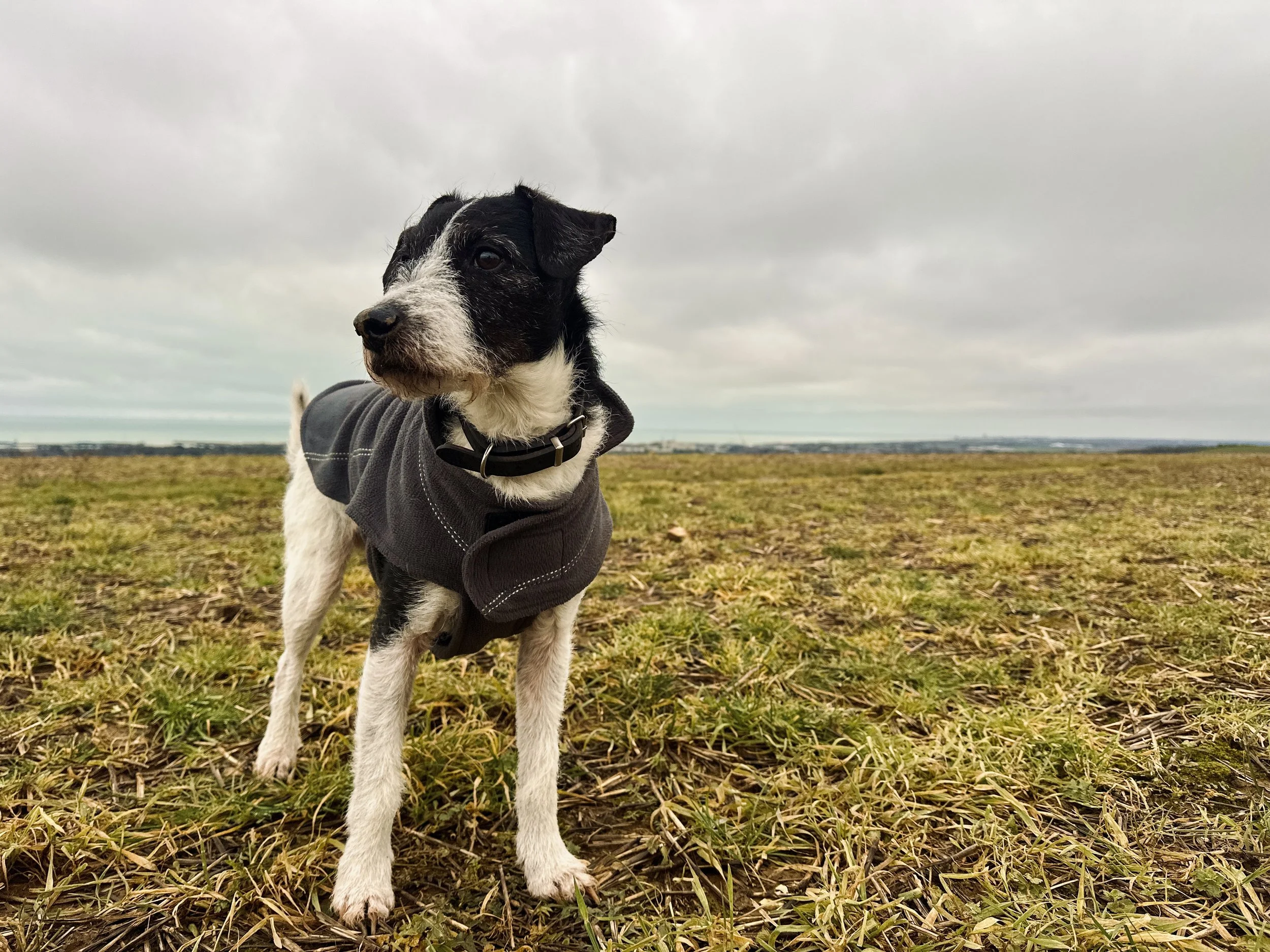
A gentle story of healing, balance, and emotional wellbeing in dogs
Why I’m sharing this story
I’m sharing Scamp’s journey because it reflects what I see so often in dogs: loving, sensitive beings doing their very best to cope with change, stress, and discomfort—often without showing obvious signs. Emotional strain and physical imbalance can quietly affect a dog’s behaviour, health, and sense of self, and it’s not always easy to see where those changes begin.
This is not a story of quick fixes or dramatic interventions. It’s a real-life example of how gentle, integrative support—working with the nervous system, the body, and emotional balance—can help a dog feel safe enough to heal. My hope is that Scamp’s story helps you feel less alone if your dog is struggling, and shows that there are compassionate ways to support them.
When dogs carry more than we can see
Dogs are incredibly resilient. Their survival instincts are strong and, much like animals in the wild, they often hide pain, discomfort, and emotional distress. Showing vulnerability would make them less safe, so instead they adapt. Over time, these adaptations can become patterns—subtle changes in movement, behaviour, posture, or mood that are easy to overlook or explain away.
What we don’t always see is how emotional stress, physical pain, and trauma can be held in the body. Tension can settle into muscles and connective tissue. The nervous system can remain on high alert long after a stressful experience has passed. Inflammation can quietly build. A dog may appear outwardly “fine” while inwardly working very hard to maintain balance.
Scamp’s journey brought this truth into sharp focus for me.
Scamp’s story
Scamp is a sensitive, intuitive dog—gentle, loyal, and emotionally aware. When the changes began within our household, including another dog, his brother, coming to live with us for an extended period, Scamp’s behaviour shifted noticeably. Almost overnight, he started to go grey, a visible sign of the stress he was carrying beneath the surface. His once lustrous, thick, wavy coat began to thin and lose its shine, becoming dull.
Alongside these physical changes, his behaviour altered. He became more reactive and guarded, showing signs of heightened sensitivity and unease. There was no obvious injury and no single moment where everything changed - just a quiet sense that something wasn’t quite right.
Over time, I noticed small but consistent signs that his body was less at ease. He coped, as dogs so often do, adapting to what was being asked of him. But what Scamp was showing me was not simply physical discomfort- it was emotional stress being held within his body. Change, uncertainty, and accumulated tension had begun to affect how safe and settled he felt within himself.
This is something I see often in dogs: trauma and stress that hasn’t been fully processed, expressing itself through behaviour, sensitivity, posture or subtle changes rather than obvious pain.
Supporting the body’s natural ability to heal
Scamp’s healing journey involved gentle, integrative support, always working alongside conventional veterinary care, never replacing it. My intention was not to “fix” him, but to support his body and nervous system so balance could begin to return.
One of the primary therapies I use is WEBB Whole Energy Body Balance, a specialised technique developed by Dr. Edward Bassingthwaighte, often known as The Healing Vet. Dr. Bassingthwaighte learned from equine veterinarian Tom Ahern, who had a special interest in treating horses with chronic neck issues. Through careful observation and hands-on work, Tom developed a method to mobilise the vertebrae in the neck, resolving cases of lameness that other investigations had been unable to explain.
WEBB has since evolved into a refined and gentle approach used to relieve pain, reduce inflammation, ease anxiety and trauma, and support the body’s natural healing processes. It works with the nervous system and the body’s energetic and structural balance, allowing areas of restriction and tension to soften and release.
Alongside WEBB, I also supported Scamp with Reiki, an energy healing method that promotes relaxation, emotional balance, and a sense of safety. Reiki is particularly supportive for sensitive animals, as it is non-invasive and deeply calming.
In addition, I drew on my training in homeopathy, having completed a year-long course, Homeopathy for Pets, with veterinarian Chris Aukland. This course was deeply informative and designed to empower pet owners with a clear understanding of how homeopathy can be used responsibly and thoughtfully for their animals.
Homeopathy is not a replacement for veterinary care. Rather, it can be used preventatively or alongside conventional treatment, helping to support the body’s natural healing processes and, in some cases, aid recovery when integrated appropriately.
Healing happens when a dog feels safe
One of the most important aspects of Scamp’s healing was allowing his body to feel safe enough to let go. Healing does not happen when the nervous system remains in a constant state of alert or protection. It happens when the body is able to shift into rest, repair, and regulation.
As Scamp received gentle, consistent support, subtle changes began to unfold. His body softened. His energy settled. His behaviour reflected a greater sense of ease and confidence. There was no rush and no expectation of immediate results—just patient, compassionate support.
This is often how healing looks in animals. Quiet, gradual and deeply transformative.
Why this matters for your dog
I share Scamp’s story because many dogs live with unrecognised stress, trauma, or discomfort. They cope because they have to—but coping is not the same as thriving.
If you’ve ever felt that something isn’t quite right with your dog, even when tests come back normal or you’re told everything looks fine, your intuition may be picking up on something subtle and real. Behavioural changes, emotional sensitivity, or ongoing tension can all be signs that your dog’s system is asking for support.
There are gentle, compassionate ways to help—approaches that honour the whole animal: body, mind, and emotional wellbeing, while working alongside conventional veterinary care.
A gentle invitation
Scamp’s healing journey is a reminder of the wisdom animals carry, and how much they benefit when we listen with patience and care. Healing is not about forcing change; it’s about creating the conditions where balance can return naturally.
In future posts, I’ll be sharing about how different dogs within the same household responded differently to change, and what this has taught me about the nervous system, trauma and emotional well being.
If this story resonates with you, you’re welcome to get in touch or explore my other writings on gentle, trauma-informed support for animals.
